
The values are typically represented by varying shades or intensities of color, where each color corresponds to a specific range of values. This allows you to quickly identify patterns, trends, and outliers in the data.
After opening your Report, Click "Add" on the upper right corner to set up your Heat Map Chart.
- Select Heat Map from Chart Selection.
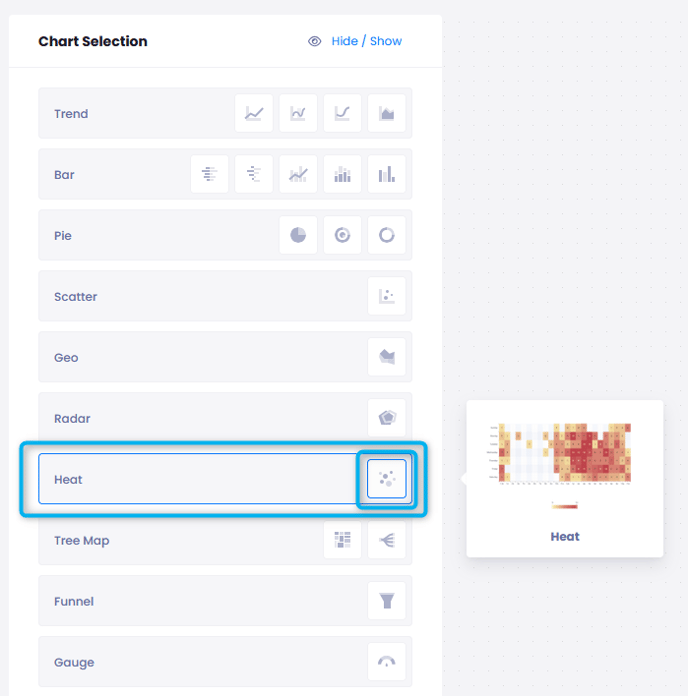
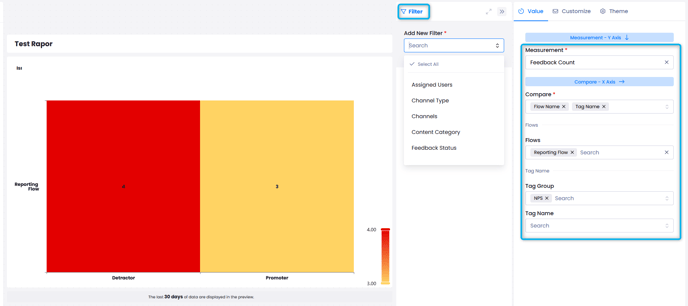
- From the right-hand menu select the data you wish to measure from Measure, such as NPS, CSAT or Feedback Count.
- Select what you want to compare, for example, if you want to compare different units, select Unit Name.
- From the "Filter" button, you can add additional filters, such as tags.
- You can add limits to your data using the Customize menu, or choose the frequency of the data shown in the chart.

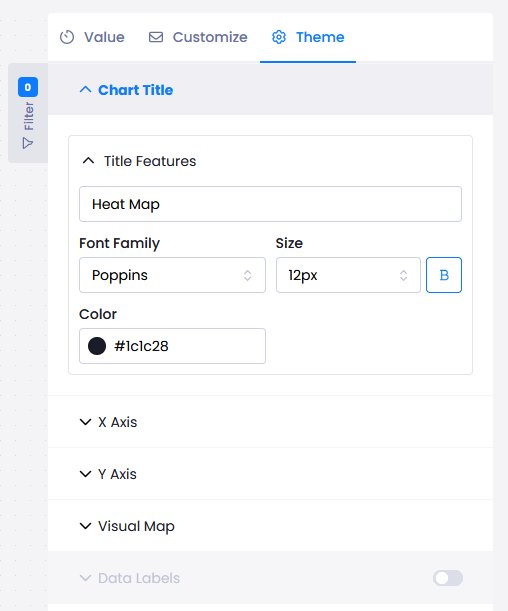
- You can change the appearance of your chart with the Theme menu.
The Visual Map button allows you to change the color series used in the chart.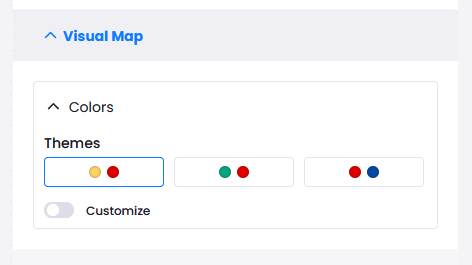
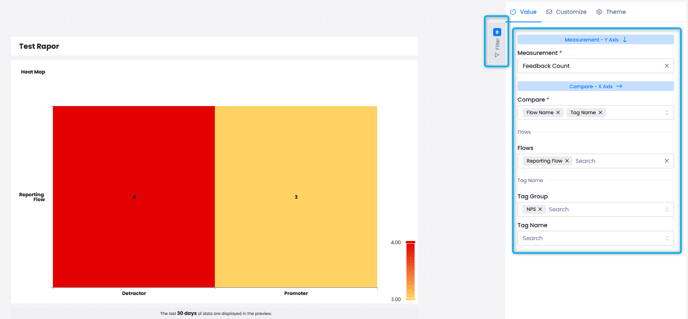
For example, to create a Heat Map chart for the feedback count by NPS tags of the Reporting flow, you can follow the below steps:
- From the Measurement section, select Feedback Count.
- From the Compare section, select Flow Name and Tag Name.
- From Flow Name, select the relevant flow.
- From the Tag Group, select the relevant group that contains your NPS tags.
- The preview on the left will show you the data you have requested from the last 30 days. To see real results, click Finish to publish the chart.
Your graph will look as below once added to the report.
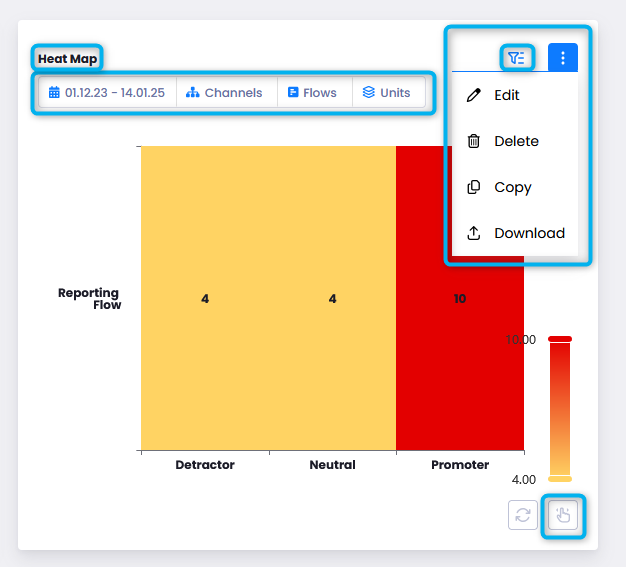
You can select the Filter button on the upper right corner to see Date, Flow and Channel filters spesific to this graph.
You can resize and move the graph around with the lower right button.
You can click on the "Heat Map" text to rename the graph.